
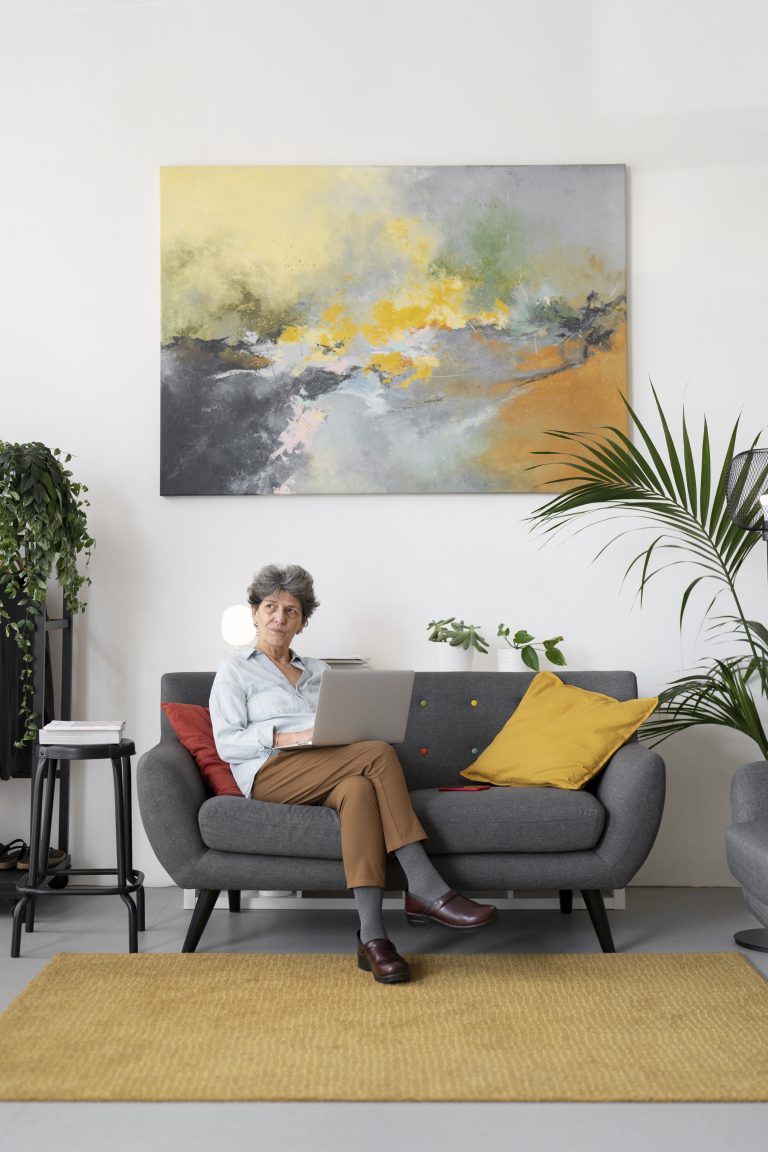
The living room is one of the most important spaces in a home. It is where we relax, welcome guests, spend time with family, and often display elements that best reflect our taste. Properly selected paintings for the living room can completely transform the character of the interior, emphasize its style, and make even a simple arrangement feel more personal.
Choosing a painting, however, should not be limited to matching colors. The size of the artwork, its proportions, technique, subject, framing, and placement are also important. A different painting for the living room will work above a sofa, another above a sideboard, and yet another in a large open-plan space connected to the dining room.
How do you choose artwork that not only looks good but also suits the interior and the people who live there? In this guide, we explain what to consider when selecting paintings for different living room styles.
Why Choose a Wall Painting for the Living Room?
Walls take up a large part of every room, so leaving them completely empty can make the interior look unfinished. The right wall painting for the living room serves more than a decorative purpose. It can also organize the space, draw attention to a chosen area, and connect the colors of other interior elements.
A well-chosen painting can:
- emphasize the interior style,
- introduce an additional color,
- enliven a neutral arrangement,
- create a cozy atmosphere,
- visually widen or heighten the room,
- become the main decorative focal point,
- reflect the owners’ interests and personality.
Unlike many other decorations, a painting does not take up space on the floor, table, or shelves. This makes it suitable even for small rooms. One distinctive decorative painting for the living room can replace several smaller accessories and bring visual consistency to the interior.
How to Match a Painting to the Style of the Living Room
A painting does not need to contain exactly the same colors as the furniture, curtains, or rug. It should, however, work with the overall character of the interior. It can be matched through harmony or through deliberate contrast.
In a calm, muted living room, an intense composition can become a strong accent. In a richly decorated interior, a more balanced artwork may work better. The most important thing is to maintain balance between the painting and the other elements of the room.
Paintings for a Modern Living Room
Contemporary interiors are often based on simple lines, a limited number of decorations, and neutral colors. Paintings for a modern living room can introduce energy, depth, and individual character into such a space.
Good choices include:
- abstract paintings,
- geometric compositions,
- minimalist landscapes,
- architecture-inspired paintings,
- modern portraits,
- expressive color combinations.
A modern painting for the living room can be both very restrained and full of dynamic patches of color. In a minimalist interior, the quality of execution is particularly important because every detail is clearly visible. It is therefore worth choosing artwork that remains interesting even when viewed up close.
A large painting placed above the sofa can become the most important element of the entire arrangement. In a modern living room, two or three paintings connected by a shared color palette or subject can also look effective.
Paintings for a Boho-Style Living Room
The boho style is associated with natural materials, freedom, handicrafts, and warm colors. Paintings for a boho-style living room should suit an interior filled with wood, wicker, linen, cotton, and plants.
Such interiors work well with:
- botanical motifs,
- landscapes,
- abstract compositions in earthy tones,
- nature-inspired paintings,
- delicate portraits,
- works in shades of beige, brown, olive green, and terracotta.
This does not mean that a boho painting has to be calm and monochromatic. It may contain expressive colors, provided that they remain consistent with the natural character of the interior. A well-chosen piece will make the living room feel cozier and less like a showroom.
Paintings for a Glamour-Style Living Room
Glamour interiors are based on elegance, glossy accessories, decorative fabrics, and carefully selected details. Paintings for a glamour-style living room should reinforce this effect without necessarily being overly ornate.
Suitable options include:
- elegant abstract paintings,
- portraits,
- compositions with strong contrast,
- works in shades of navy blue, black, white, gold, or silver,
- decorative botanical motifs,
- subtle urban landscapes.
The artwork can be placed in a decorative frame, especially if the interior refers to a more classic version of the glamour style. In a more modern arrangement, an unframed canvas or simple frame may work better because it will not compete with the other accessories.
What Size Painting Should You Choose for the Living Room?
Even an interesting painting may not look right if its size does not suit the wall and furniture. A piece that is too small may appear random, while one that is too large can overwhelm the room.
Before purchasing, it is worth measuring:
- the width of the wall,
- the width of the piece of furniture below the painting,
- the distance between the furniture and the ceiling,
- the amount of free space on both sides,
- the height at which the eye naturally rests.
A painting hung above a sofa or sideboard should usually be about half to two-thirds the width of the furniture. This is not a strict rule, but it helps maintain suitable proportions.
In a large living room, you can choose one larger artwork or create a gallery using several pieces. Small wall paintings for the living room are best grouped together because individually they may disappear on a large wall.
Before hanging the artwork, you can mark its dimensions on the wall with painter’s tape. This allows you to assess whether the proportions are right before making any holes.
At What Height Should You Hang a Painting?
It is usually recommended that the center of the painting should be approximately at eye level. In practice, this is often around 145–160 cm from the floor. The correct height, however, should depend on the room layout and the furniture below the artwork.
A painting above a sofa should not be placed close to the ceiling. A better effect is achieved by leaving approximately 15–30 cm between the back of the sofa and the bottom edge of the artwork. This visually connects the painting with the furniture.
In living rooms with high ceilings, it is important not to hang the artwork too high. The painting should remain part of the seating area rather than appearing as a separate element floating above the arrangement.
How to Choose the Color Palette of a Painting
Color is one of the first things we notice when looking at a painting. It can calm the space, enliven it, or create a strong contrast. There is no need, however, to search for artwork that perfectly matches every accessory.
A good solution is to choose a painting that refers to one or two colors already present in the room. This may be the color of an armchair, cushion, rug, curtain, or piece of ceramic. As a result, the arrangement will look cohesive without becoming monotonous.
Colorful Paintings for the Living Room
Colorful paintings for the living room work well in spaces decorated in neutral tones. A white, beige, or gray wall provides a calm background that allows saturated colors to stand out.
Such a painting can:
- enliven a minimalist interior,
- break up the dominance of gray,
- introduce energy,
- connect different accessory colors,
- become the focal point of the room.
A colorful composition does not have to be chaotic. It can be based on several harmoniously selected tones and subtle color transitions. The intensity of the colors should correspond to the atmosphere you want to create.
Black-and-White Paintings for the Living Room
Black-and-white paintings for the living room are versatile and suit many interior styles. They work in modern, industrial, classic, and minimalist spaces. They can depict portraits, architecture, abstract forms, plants, or landscapes.
Black and white does not mean a lack of expression. Contrast, line, light, and texture can create a highly decorative effect. A black-and-white painting can also work in a living room that already contains many vivid colors.
Such artwork can introduce order and elegance into the interior. It looks especially good on walls painted white, gray, navy blue, or bottle green.
Abstract Paintings for the Living Room – Freedom of Interpretation
Abstract paintings for the living room are among the most frequently chosen decorations for contemporary interiors. They do not represent reality in a literal way, so they allow for personal interpretation. They may evoke movement, nature, emotions, architecture, or light.
Abstract art works well when you want a decoration that attracts attention without imposing one specific story. It may be calm and minimalist or dynamic and full of contrast.
When choosing an abstract painting, pay attention to:
- dominant colors,
- the direction of the composition,
- the intensity of contrast,
- the texture of the paint,
- the proportions of the artwork,
- the emotions it evokes.
A horizontal abstract painting can visually widen the wall above a sofa. A vertical artwork, on the other hand, can emphasize the height of the room and fill a narrower space effectively.
Hand-Painted Paintings for the Living Room or Printed Decorations?
The market offers both printed images and original artworks created by artists. Each option meets different needs, but hand-painted paintings for the living room have qualities that cannot be fully reproduced in print.
An original painting has visible brushstrokes, texture, subtle irregularities, and individual character. It also changes depending on the viewing angle and lighting. This gives the interior a decoration that does not look mass-produced.
A hand-painted painting for the living room can be a ready-made artwork selected from a gallery or a commissioned piece. In the second case, the size, color palette, subject, and overall character of the composition can be discussed in advance.
Original artwork is a good choice for people looking for:
- a unique decoration,
- visible texture,
- an element that highlights the individuality of the interior,
- a long-lasting piece,
- a gift for an important occasion,
- direct contact with the artist.
This does not mean that the painting must perfectly match every shade in the interior. The most important thing is that it evokes positive emotions and looks good in the selected space.
Canvas Paintings for the Living Room
Canvas paintings for the living room are popular because of their appearance, durability, and the possibility of displaying them without an additional frame. Canvas stretched over a wooden frame has a three-dimensional form and works well in both modern and more traditional interiors.
The edges of the painting can be:
- painted as part of the composition,
- painted in one solid color,
- left in their natural form,
- covered by a frame.
A canvas painting is relatively light, so it can be safely hung even in a larger format. A properly protected surface helps preserve the colors for a long time.
Before buying, it is worth checking whether the artwork is ready to hang or requires additional framing. It is also useful to ask about the technique and the way the painted surface has been protected.
Acrylic Paintings for the Living Room
Acrylic paintings for the living room offer a wide range of colors and effects. Acrylic paints can be used to create both smooth surfaces and pronounced textures. They are suitable for abstract paintings, landscapes, portraits, and decorative compositions.
The advantages of acrylic painting include:
- intense colors,
- durability,
- the possibility of building multiple layers,
- a variety of textures,
- good compatibility with modern interiors.
An acrylic painting may have a matte, semi-matte, or slightly glossy finish. Its appearance depends not only on the color palette but also on the light falling on the surface.
In the living room, it is best to avoid hanging a painting in a place exposed to intense direct sunlight for many hours a day. Artwork should also not be placed directly next to a strong source of heat.
Elegant Paintings for the Living Room – What Creates the Effect?
Elegant paintings for the living room do not have to feature classical motifs or be placed in richly decorated frames. Elegance is created primarily through quality, balanced composition, carefully selected colors, and proper display.
An elegant effect can be achieved by:
- choosing the right format,
- leaving enough empty space around the painting,
- selecting suitable framing,
- using appropriate lighting,
- limiting the number of competing decorations,
- hanging the artwork at the correct height.
In a modern interior, a large minimalist abstract painting can look elegant. In a traditional living room, a landscape, portrait, or nature-inspired composition may work better. The artwork should be suited to the proportions of the room.
One Large Painting or Several Smaller Ones?
The choice depends on the size of the wall and the desired effect. One large painting creates a strong focal point and introduces visual order. It is a good option above a sofa, sideboard, or dining table.
Several smaller works allow you to create a more personal gallery. You can combine paintings with similar subjects, colors, or techniques. The composition should still look intentional.
When creating a gallery wall, it is worth:
- keeping similar spacing between the pieces,
- establishing a shared alignment,
- connecting the artworks through one theme,
- limiting the number of frame styles,
- arranging the composition on the floor first.
Grouped wall paintings for the living room can have different formats, but they should form a coherent whole. In a small interior, it is better not to use too many elements.
How to Light a Painting in the Living Room
Lighting affects the way a piece of art is perceived. The same painting can look different in daylight, warm lamp light, and focused ceiling lighting.
Good options include:
- ceiling spotlights,
- adjustable wall lights,
- lamps directed toward the wall,
- discreet linear lighting.
The light should not create strong reflections or hit the artwork at too sharp an angle. It is worth choosing light sources that do not distort colors.
Natural light should also be considered when planning the display. A wall opposite a large window may be well lit, but glass or a protective coating on the artwork may reflect the surroundings.
The Most Common Mistakes When Choosing a Painting for the Living Room
Choosing art is a personal decision, but several common mistakes can weaken the final decorative effect.
Choosing a Painting That Is Too Small
A small piece hung alone on a large wall may look accidental. In this situation, it is better to choose a larger format or create a group of several paintings.
Hanging the Painting Too High
The artwork should remain visually connected to the furniture and seating area. When hung close to the ceiling, it may appear detached from the rest of the interior.
Matching Only the Color of the Sofa
A painting is a work of art, not merely a color sample. It is worth considering emotions, subject, composition, and technique as well.
Using Too Many Decorations
A distinctive painting needs space. Too many shelves, frames, posters, and other decorative items can make the wall look chaotic.
Following a Temporary Trend
Interior trends change quickly. It is better to choose artwork that you genuinely like and will continue to find interesting for many years.
Where to Buy a Painting for the Living Room
People wondering where to buy a painting for the living room can choose from galleries, artists’ studios, online shops, art fairs, and direct offers from artists.
Buying directly from the artist makes it possible to:
- learn the story behind the artwork,
- check the technique,
- obtain information about size and materials,
- commission a different format,
- discuss an individual color palette,
- choose an original piece instead of a mass-produced decoration.
When buying online, always check the exact dimensions. A photo showing the painting in an interior setting is for reference only and may not accurately reflect the actual scale. Marking the planned size on the wall with tape can be helpful.
It is also worth reviewing information about delivery, packaging, framing, and the option to commission a custom piece.
Is It Worth Commissioning a Painting for the Living Room?
A commissioned painting is a good solution when it is difficult to find a ready-made piece with the right size or character. You can discuss the dimensions, dominant colors, subject, and technique with the artist.
The commission should not, however, involve matching every shade precisely to the furniture. It is worth leaving the artist enough creative freedom so that the artwork retains its individual character.
A commissioned piece may depict:
- a portrait,
- an important place,
- architecture,
- a landscape,
- an abstract composition,
- a motif connected with the interests of the household members.
Such a hand-painted painting for the living room can also have sentimental value and become an important element of the home.
How to Choose a Painting That Will Not Become Boring After a Few Months
The best criterion is your personal reaction to the artwork. A painting should attract attention, evoke emotion, or encourage longer observation. It is not worth making a decision based solely on the popularity of a particular style.
Before buying, ask yourself a few questions:
- Do I like this painting regardless of current trends?
- Does it suit the atmosphere I want to create in the living room?
- Is its size suitable for the selected wall?
- Will the colors look good in daylight and evening light?
- Do I prefer a calm decoration or a strong focal point?
- Am I looking for an original artwork or a reproduction?
- Will the painting leave enough empty space around it?
A well-chosen painting does not have to be neutral. Sometimes a bold composition is precisely what gives the interior its unique character.
Paintings for the Living Room – Summary
When choosing paintings for the living room, it is worth considering not only the color of the walls and furniture but also the size of the room, proportions, lighting, and the overall character of the arrangement. Different artworks will suit a modern, boho, glamour, or classic living room.
A large painting for the living room can create the main decorative focal point, while a group of smaller works can form a more elaborate gallery. Abstract paintings for the living room offer great freedom of interpretation, while black-and-white paintings for the living room help create an orderly and timeless arrangement. Colorful paintings for the living room, on the other hand, enliven neutral interiors and introduce energy.
It is also worth considering hand-painted paintings for the living room, which stand out because of their originality, texture, and individual character. Both acrylic paintings for the living room and other works created on canvas can become long-lasting decorations that bring enjoyment for many years.
The most important thing is that the chosen artwork reflects personal taste. The living room is part of everyday life, so the art displayed there should not only match the furniture but, above all, create an atmosphere in which the household feels comfortable.
Frequently Asked Questions
What Painting Should You Choose Above the Sofa?
A horizontal painting or a group of several artworks works well above a sofa. The width of the decoration should be approximately half to two-thirds the width of the furniture. It is best to hang it around 15–30 cm above the backrest.
Does a Painting Have to Match the Colors of the Living Room?
It does not need to repeat the interior colors exactly. It is enough for the artwork to refer to one of the existing shades or create a deliberate contrast. Overall visual consistency is more important than perfect color matching.
What Paintings Suit a Modern Living Room?
Abstract paintings, geometric compositions, minimalist landscapes, contemporary portraits, and architecture-inspired artworks suit modern interiors. Both calm compositions and intense color accents can work well.
Is It Worth Buying a Hand-Painted Painting?
An original artwork has unique texture and character. It is not identical to mass-produced decorations, so it helps create a more individual interior. It can also be commissioned in a specific size and color palette.
What Painting Works in a Small Living Room?
In a small living room, one medium-sized painting or a small group of coordinated works is usually a good choice. It is worth selecting compositions that are not visually too heavy. A horizontal format can make the wall appear wider.
What Paintings Work in an Elegant Living Room?
Balanced abstract paintings, portraits, landscapes, and compositions in muted colors work well in elegant interiors. Quality, framing, and suitable lighting are particularly important.
Does a Canvas Painting Need to Be Framed?
Not always. Canvas stretched over a wooden frame can be hung without an additional frame, especially in a modern living room. A frame may, however, emphasize the character of the artwork and help it suit a classic, glamour, or eclectic interior.